Sean Wang’s feature directorial debut is a fitting homage to the early 2000s internet era
It’s time we have a serious conversation. Asian-American films are — to put it as nicely as possible — not good. I don’t only mean this from a filmmaking perspective, although they definitely don’t excel through this lens either; they’re bad for Asian and Asian-American sentiment in the West. Most of these films tend to lean into an overdone, tropey mess that end up portraying its issues as trivial, even asinine. You know, the typical “stinky lunches”, depictions of tiger moms, and myriad of other “issues” that apparently define our identities, which in fact results in an appeasement to whiteness. But I’m not here to talk about my gripe with Asian-American media — although I could for ages — I’m here to talk about why Dìdi is a strong step in the right direction.
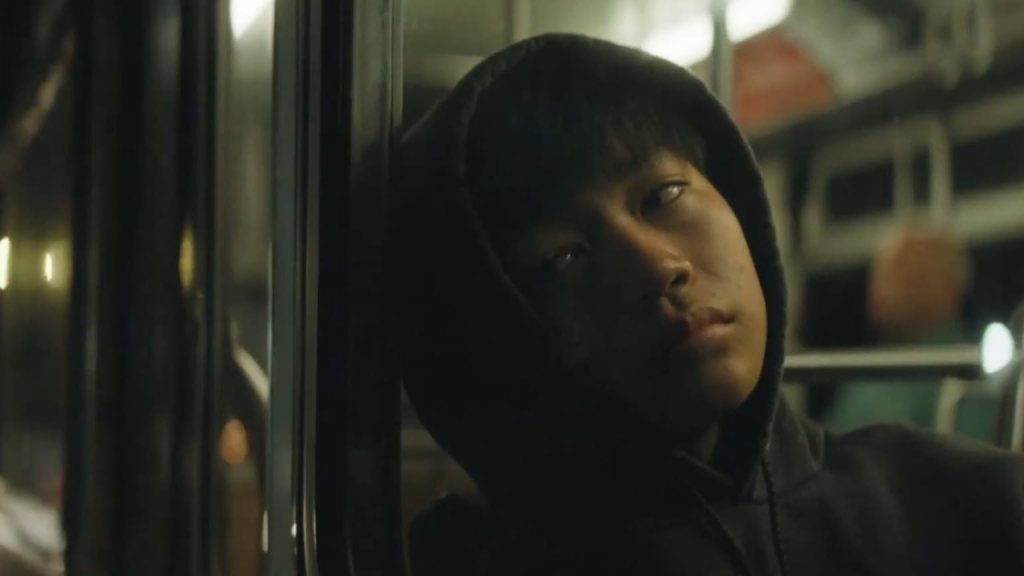
Dìdi is a loose pseudo-autobiographical piece inspired by director Sean Wang’s teenage life in Fremont, California (my own birthplace!) in the late 2000s. Stylized with plenty of grainy camcorder skateboarding mixtapes, Facebook pokes, and AOL Instant Messenger, it’s meant to pay homage to a digitally-transitional era, invoking nostalgia in the same way that Jonah Hill’s Mid90s does. The story is focused on Chris Wang (Izaac Wang), a 13 year old Taiwanese boy, dealing with a rather rocky relationship with his mother and sister, and an almost equally rocky relationship with his friends and all of the people he attempts to get close to. His two best friends Fahad (Raul Dial) and Soup (Aaron Chang) are anchors in his life, but even then you can see glimpses that their personalities aren’t particularly compatible. This becomes apparent when the timid Chris becomes romantically involved for the first time in his life, and the aforementioned friends try to provoke him with a certain teenage boy vulgarity that makes you wonder if you had been the same way as a child.
Madi (Mahaela Park) is Chris’ first crush; he meets her at a party and they instantly hit it off, talking on and offline. Much of Chris’ relationships, both with Madi and his friends, are shown through the way he uses the internet; the film is heavily characterized by the teenage angst that came with the onset of the digital era — think the birth of Facebook, and in turn, the swan song of Myspace. But although the two of them develop an innocent intimacy together, stemming from Chris’ attempt to feign interest for Hayley Williams and A Walk to Remember, he doesn’t have the same courage and perceived masculinity as his friends, leading to an eventual rift between the two characters. This only accentuates the insecurities that he sees in himself, leading him to seek refuge in a group of skaters that he clearly doesn’t look, or feel, comfortable with. He constantly tries to find himself in other people, further exacerbating his illusion of self.
His insecurities that stem from his failed relationships and identity crises aggressively leak into his family life, in which his relationships with his sister Vivian (Shirley Chen) and mother Chungsing (Joan Chen) are shown to be complex, yet full of a restrained love. Instead of the typical ‘hating your mom’ trope or the immigrant sob story, the film chooses to depict a delicate, loving relationship between a mother and her son, which acts as a foundation for the story. It felt like a breath of fresh air seeing their relationship blossom as one of love rather than resentment and disdain that’s typically shown in the portrayal of Asian-American familial dynamics.
Ironically, the reason why Dìdi works so well as an Asian-American coming-of-age film is that it is so minimally about the Asian-American experience. Sure, there are some (just a bit more than I’d like) culturally-specific references such as Asian shame, JK Films Youtube videos, and microaggressions in the form of backhanded compliments, but they exist within the context of the film and support the story from the sidelines rather than attempt to overshadow it. Take out most of these references and the film still delivers on its central message. This isn’t a new phenomenon though, films like Lee Isaac Chung’s Minari and Celine Song’s Past Lives are able to create meaningful stories through an Asian-American lens without trivializing their issues; sometimes it’s best not to talk about them at all! At it’s core, the film is a typical teenage coming-of-age story, with a strong focus on friend and familial relations and learning to be comfortable in your own skin. Sean Wang understands that it’s okay to make a film that is unapologetically himself, without pandering to any specific audience or persona.
 mattkore